
Ultimate Guide to Cenotes in Tulum

What Are Cenotes?

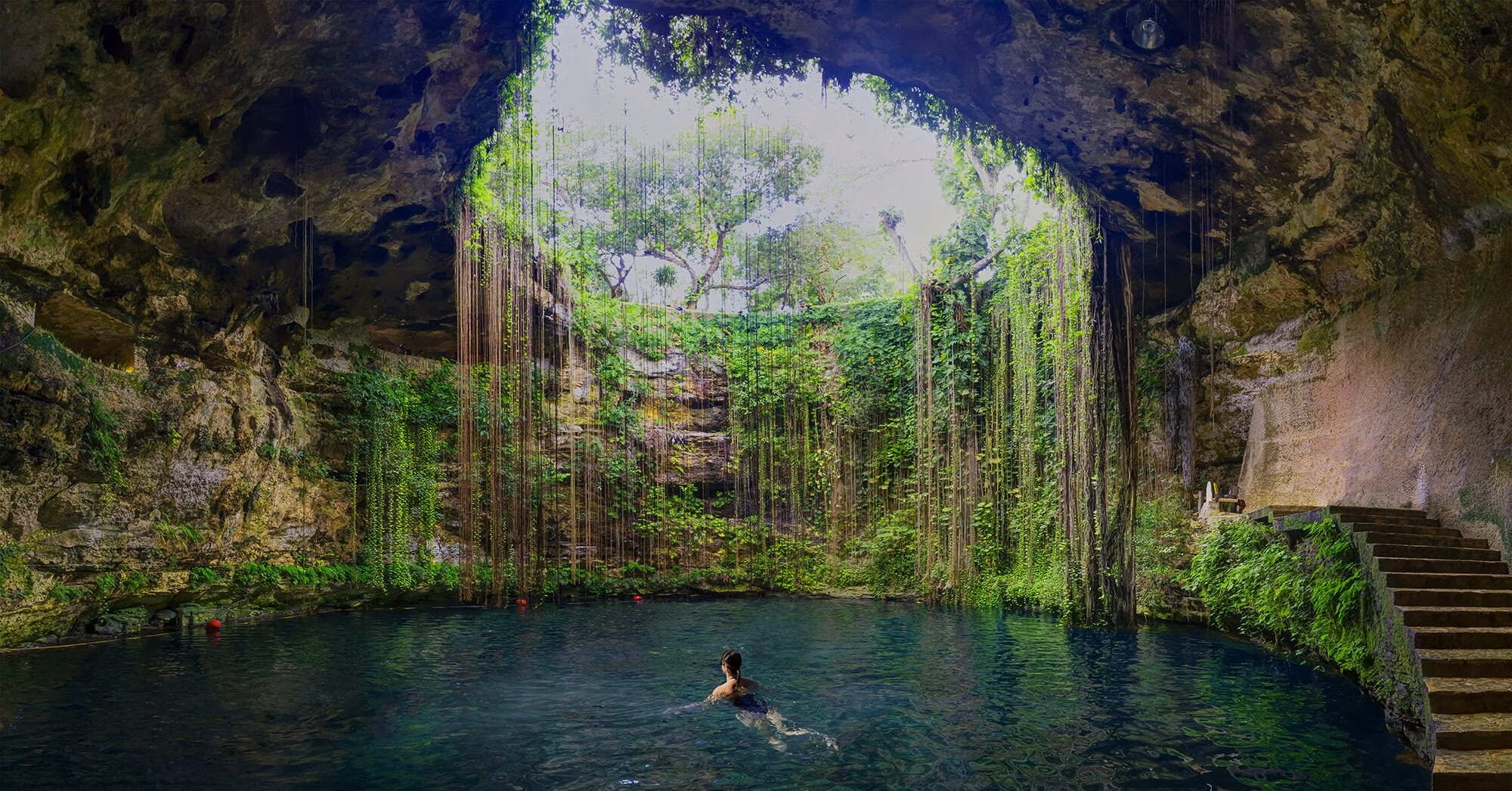
Cenotes are natural freshwater pools formed by the collapse of limestone bedrock, exposing crystalline water connected to subterranean river systems. These geological formations are unique to the Yucatán Peninsula and offer swimming, snorkeling, diving, and scenic nature experiences. (Machupicchu.org)


Top Cenotes to Visit Around Tulum

Below is a list of popular cenotes near Tulum, including approximate prices, features, and distance from Tulum town or the hotel zone:


How much do cenotes in Tulum cost?

1. Gran Cenote

Why Visit: One of the most popular, with crystal clear waters, turtles, stalactites, and snorkeling.
Price: ~500 MXN per person (about $25 USD) — equipment rentals extra. (Machupicchu.org)
Distance: ~10 minutes northwest of Tulum downtown.
Best For: First-time visitors, families, snorkeling.


2. Cenote Calavera (“Temple of Doom”)

Why Visit: Notable for its “skull” openings and adventurous jumps.
Price: ~250 MXN per person (about $12 USD). (Chris Fry | Aquarius Traveller)
Distance: ~7 minutes from Tulum.
Best For: Thrill seekers, photography.


3. Cenote Dos Ojos

Why Visit: Huge cave system with two sinkholes. Superb for snorkeling and diving.
Price: ~350 MXN for swimming, higher for diving tours. (Machupicchu.org)
Distance: ~25–30 minutes from Tulum.
Best For: Snorkeling, diving, cave exploration.


4. Cenote Cristal and Cenote Escondido

Why Visit: Two open-air cenotes right across from each other. Enjoy swimming and rope swings.
Price: ~120–200 MXN total for both. (Hey Explorer)
Distance: ~4 km south of Tulum — ~10 minutes by bike/taxi.
Best For: Budget swimmers, photography.


5. Cenote Azul

Why Visit: Beautiful open water, shallow areas, great for families.
Price: ~140–150 MXN (~$7–8 USD). (Chris Fry | Aquarius Traveller)
Distance: ~30 minutes from Tulum.
Best For: Relaxed swims, kids.


6. Casa Cenote (Cenote Manatí)

Why Visit: Freshwater meets saltwater; kayaking and paddleboarding optional.
Price: ~120–150 MXN (~$6–7.5 USD). (Chris Fry | Aquarius Traveller)
Distance: ~20 minutes north of Tulum.
Best For: Wildlife sightings, gentle snorkeling.


7. Cenote Zacil-Ha

Why Visit: Small park feel, zip line, hammocks, picnic areas.
Price: ~200–300 MXN (~$10–17 USD). (Chris Fry | Aquarius Traveller)
Distance: ~15 minutes from Tulum.
Best For: Families and group picnics.


8. Laguna Kaan Luum

Why Visit: Giant open-air lagoon with a deep cenote hole in the center.
Price: ~300 MXN. (Katie Caf Travel)
Distance: ~10–20 minutes from Tulum.
Best For: Stand-up paddleboarding, unique views.


Additional Notable Cenotes (Further Afield)

These options might require more transport time but are excellent choices if you’re exploring wider Yucatán:

  • Coba Cenotes (Multum-Ha, Choo-Ha, Tankach-Ha) – ~$100 MXN each in Coba region. (Hey Explorer)
  • Cenote Ik Kil (near Chichen Itza) – ~80 MXN (~$5 USD) but ~2 hours from Tulum as a day trip. (Chris Fry | Aquarius Traveller)

Cost Breakdown (Budget Planning)

ItemTypical Cost
Cenote entrance100–500 MXN ($5–$27 USD) per cenote (Machupicchu.org)
Snorkel rental50–150 MXN (Machupicchu.org)
Bike rental (daily)200–300 MXN (Machupicchu.org)
Collectivo fare (one-way)30–80 MXN (Travels With Elle)
Taxi to cenote100–400 MXN depending on distance (Machupicchu.org)
Food & water50–150 MXN per meal (local)

Budget Strategy: A typical cenote day visiting 2–3 sites with transport, rentals, and meals can total ~800–1,200 MXN (~$48–72 USD) per person. (Machupicchu.org)


Transportation Options (Budget Focused)

1. Bicycle

Tulum is bike-friendly and many cenotes are within cycling distance from downtown.

  • Rentals cost ~200–300 MXN/day. (Machupicchu.org)
  • Ideal for nearby sites like Cenote Cristal/Escondido, Gran Cenote.

2. Colectivo (Shared Van)

One of the cheapest ways to reach cenote zones on the main highway.

  • ~30–80 MXN per ride. (Travels With Elle)
  • Tell the driver your destination; they’ll often drop you as close as possible.

3. Taxi

Most convenient but pricier—especially for remote cenotes.

4. Scooter or Rental Car

If you’re with companions, renting a car/scooter can be cost-efficient per person and gives maximum flexibility. (Absolute Adventure Tulum)


Tips for Visiting Cenotes on a Budget

Visit Early/Late: Few make a move before opening or after peak midday, which sometimes yields lower fees at smaller cenotes. (Machupicchu.org)
Bring Your Own Gear: If you have snorkeling gear or a life jacket, bringing it reduces rental costs. (Machupicchu.org)
Pack Snacks/Drinks: Many cenote sites have limited or expensive food options.
Cash is King: Most cenotes accept cash (pesos) only; ATMs can be limited or charge high fees.


Suggested Budget Cenote Route (1 Day)

  1. Morning: Ride a bike or take a colectivo to Cenote Cristal + Escondido
  2. Midday: Grab local street food or market tacos in Tulum town
  3. Afternoon: Head to Cenote Calavera and Cenote Zacil-Ha
  4. Return: Catch a colectivo back to Tulum at sunset

Estimated total with transport and entries: ~700–1,000 MXN depending on rentals and meals.


{ "@context": "https://schema.org", "@type": "FAQPage", "mainEntity": [ { "@type": "Question", "name": "What are cenotes in Tulum?", "acceptedAnswer": { "@type": "Answer", "text": "Cenotes in Tulum are natural freshwater sinkholes formed when the limestone bedrock collapses, exposing underground rivers and pools. They are a signature natural attraction of the Yucatán Peninsula and popular for swimming, snorkeling, and diving." } }, { "@type": "Question", "name": "How much does it cost to visit cenotes in Tulum?", "acceptedAnswer": { "@type": "Answer", "text": "Entrance fees for cenotes near Tulum vary by site, usually ranging from around 100 to 500 MXN per person, depending on popularity, facilities, and whether rentals are included." } }, { "@type": "Question", "name": "What are the best cenotes to visit near Tulum?", "acceptedAnswer": { "@type": "Answer", "text": "Some of the most recommended cenotes near Tulum include Gran Cenote for snorkeling, Cenote Calavera for adventure and photography, Dos Ojos for caves, Casa Cenote for relaxed swimming, and Cenote Azul and Cristalino for open-air swimming experiences." } }, { "@type": "Question", "name": "Can I visit cenotes in Tulum without taking a tour?", "acceptedAnswer": { "@type": "Answer", "text": "Yes, most cenotes in Tulum can be visited independently. Visitors pay the entrance fee at the cenote and can explore on their own without booking a tour, which helps save on costs." } }, { "@type": "Question", "name": "What is the cheapest way to get to cenotes in Tulum?", "acceptedAnswer": { "@type": "Answer", "text": "The most budget-friendly transportation options to reach cenotes around Tulum are by bicycle or using a colectivo (shared van). Bikes can cost around 200–300 MXN per day, and colectivos typically charge a small fare per ride." } }, { "@type": "Question", "name": "Do cenotes near Tulum require biodegradable sunscreen?", "acceptedAnswer": { "@type": "Answer", "text": "Yes. Most cenotes around Tulum require visitors to use biodegradable sunscreen to protect the delicate freshwater ecosystem. Some cenotes may not allow regular sunscreen at all." } }, { "@type": "Question", "name": "Are cenotes in Tulum safe for swimming?", "acceptedAnswer": { "@type": "Answer", "text": "Cenotes in Tulum are generally safe for swimming when you follow posted safety guidelines. Life jackets are usually available or required, and visitors should swim within their ability levels." } }, { "@type": "Question", "name": "What should I bring when visiting cenotes in Tulum?", "acceptedAnswer": { "@type": "Answer", "text": "When visiting cenotes, bring cash (Mexican pesos) for entrance fees, biodegradable sunscreen, a towel, swimwear, water, and any snorkeling gear you plan to use to avoid rental fees." } }, { "@type": "Question", "name": "Are there free cenotes in Tulum?", "acceptedAnswer": { "@type": "Answer", "text": "There are a few smaller or less-touristy cenotes around Tulum that are either free or have very low entrance fees, though most popular cenotes charge a modest entrance price." } }, { "@type": "Question", "name": "When is the best time to visit cenotes in Tulum?", "acceptedAnswer": { "@type": "Answer", "text": "The best time to visit cenotes near Tulum is early in the morning shortly after opening. This helps you avoid crowds and often provides better water clarity and lighting for photos and swimming." } } ] }

FAQ Questions & Answers 

1. What are cenotes in Tulum?

Cenotes in Tulum are natural freshwater sinkholes formed by collapsed limestone, exposing underground rivers and pools. They were sacred to the ancient Maya and are now popular for swimming, snorkeling, and diving.


2. How much do cenotes in Tulum cost?

Most cenotes in Tulum cost between 100 and 500 MXN ($6–$27 USD) per person. Smaller cenotes are usually cheaper, while popular sites like Gran Cenote and Dos Ojos are more expensive.


3. What is the best cenote to visit in Tulum?

Some of the best cenotes in Tulum include Gran Cenote for snorkeling, Cenote Calavera for adventure, Dos Ojos for caves, and Casa Cenote for relaxed swimming near the beach.


4. Are there free cenotes in Tulum?

There are currently no completely free cenotes in Tulum, but several offer low entrance fees under 150 MXN, especially smaller or less touristy cenotes located outside the main hotel zone.


5. What is the cheapest way to get to cenotes in Tulum?

The cheapest way to reach cenotes in Tulum is by bicycle or colectivo (shared van). Bikes cost around 200–300 MXN per day, while colectivos typically charge 30–80 MXN per ride.


6. Can you visit cenotes in Tulum without a tour?

Yes, most cenotes in Tulum can be visited independently without booking a tour. Entrance fees are paid directly at the cenote, making self-guided visits more affordable than organized excursions.


7. Are cenotes in Tulum safe to swim in?

Yes, cenotes in Tulum are generally safe for swimming when following posted rules. Life jackets are often required, and visitors should avoid using sunscreen unless it is biodegradable.


8. Do cenotes in Tulum require biodegradable sunscreen?

Yes, most cenotes in Tulum require biodegradable sunscreen to protect the delicate freshwater ecosystems. Some cenotes may deny entry if regular sunscreen is used.


9. What should I bring to a cenote in Tulum?

You should bring cash (MXN), swimwear, a towel, biodegradable sunscreen, water, and snorkeling gear if you want to avoid rental fees.


10. Which cenotes in Tulum are best for families?

Family-friendly cenotes in Tulum include Cenote Azul, Gran Cenote, and Zacil-Ha, as they offer shallow areas, easy access, and calm waters.


11. What time is best to visit cenotes in Tulum?

The best time to visit cenotes in Tulum is early morning, right after opening, to avoid crowds and enjoy clearer water and better lighting.


12. Are cenotes open year-round in Tulum?

Yes, cenotes near Tulum are open year-round. The dry season (November–April) offers clearer water, while the rainy season (May–October) brings fewer crowds.